
In the glittering world of Bollywood, 2005 was more than just another year of blockbuster comedies and chart-topping songs — it was the year when the small town made a big, glorious comeback. After years of exotic European backdrops and NRI romances, audiences were once again taken home — to the lanes of Kanpur, the ghats of Varanasi, and the dreamy bazaars of Uttar Pradesh — all thanks to Bunty Aur Babli.
The year the heartland returned to the big screen
Bollywood had long been obsessed with foreign locales — remember those chiffon sarees fluttering in Switzerland? But Bunty Aur Babli flipped the script. It gave Indian small-town life a glamorous, YRF-style designer makeover. The result? Viewers were instantly hooked.
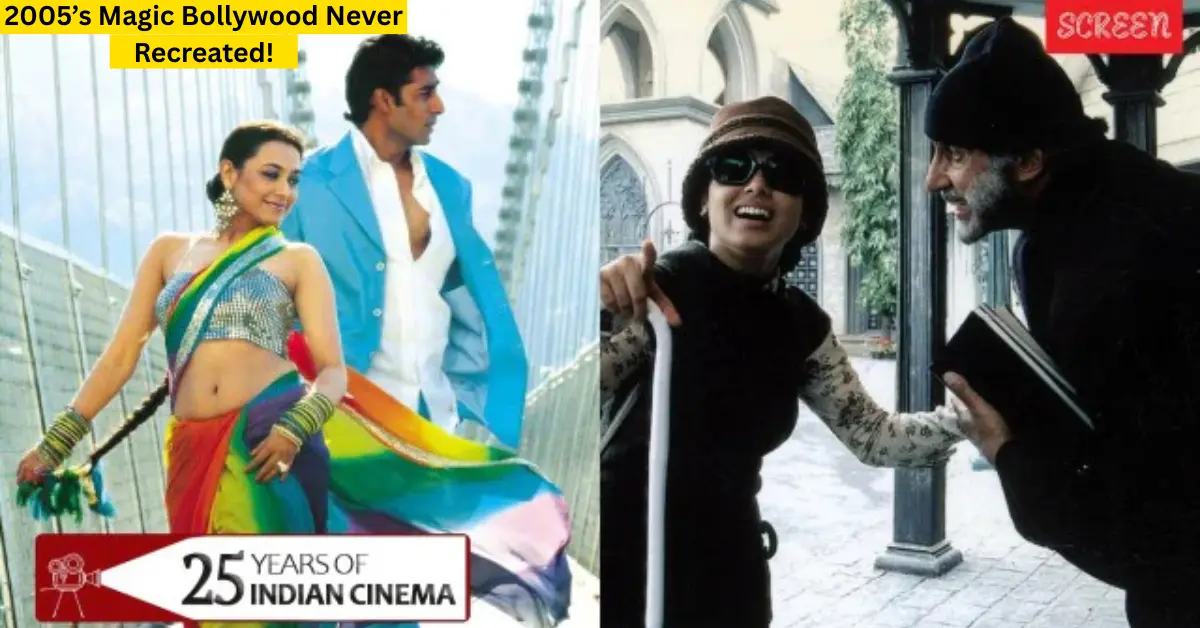
Fans still remember the vibrancy of Abhishek Bachchan and Rani Mukerji’s con-couple duo — two restless small-town dreamers, “jo jhola utha ke chale the bade shehron ki taraf,” chasing their destiny with unmatched desi swag.
You can’t help but wonder — would real-life Kanpur boy Shaad Ali, who directed the film, even recognize his own city in this candy-colored fantasy? Perhaps not entirely. His version of Uttar Pradesh was a place where ambition met aesthetics — raw aspirations wrapped in gloss and glitter.
And that’s exactly what struck a chord. Bunty Aur Babli replaced Bollywood’s old portrayal of dusty, struggling small towns with something playful, bright, and irresistibly cinematic.
Soon enough, fans in the same small towns started wearing knock-offs of Bunty and Babli’s iconic costumes — a full-circle fashion revolution straight out of Yash Raj’s design rooms. “Stars wear clothes – fans wear dreams,” as one fashion blogger cheekily put it.
“Kajra Re” – the dance floor anthem that never died
If there was one song that ruled 2005 (and continues to rule Indian weddings), it’s Kajra Re. The sizzling item number featuring Aishwarya Rai (before she became a Bachchan) alongside Amitabh and Abhishek was pure magic.
Even today, when that first “Kajra re kajra re, mere kaare kaare naina” drops, fans can’t resist getting up to dance. Aishwarya’s grace, Amitabh’s swag, and Abhishek’s mischievous grin — it was a generational crossover nobody saw coming.
It’s no wonder fans still ask, “Is Bunty Aur Babli hit or flop?” The answer: A resounding hit. The film wasn’t just a commercial success — it became a cultural phenomenon that defined an era of Bollywood storytelling.

Loud laughs, heartfelt dramas — and a film that changed the conversation
While audiences were laughing out loud with No Entry and Garam Masala, 2005 had another story to tell — a quiet, emotional one. Sanjay Leela Bhansali’s Black hit theatres like a storm of silence and soul.
Featuring Rani Mukerji as a deaf-blind girl and Amitabh Bachchan as her tough yet tender mentor battling Alzheimer’s, Black was unlike anything mainstream Bollywood had dared to make.
It wasn’t your typical feel-good entertainer. It was haunting, poetic, and deeply moving — and it made the nation talk about disability, empathy, and education in a way no film had before.
Fans still ask, “How does cinema reflect India’s unity and culture?” Black was one of those rare films that showed how deeply storytelling could connect hearts. Through its universal themes of resilience and compassion, it reminded viewers that humanity itself is India’s greatest unifier.
The rise of new sensibilities: From Salaam Namaste to Socha Na Tha
2005 wasn’t just about the big hits — it was also about quiet revolutions. Salaam Namaste, starring Saif Ali Khan and Preity Zinta, introduced Indian audiences to the idea of a live-in relationship. For a conservative Bollywood, that was nothing short of daring!
Preity’s ice-cream cravings and Saif’s confused-yet-charming dad-to-be act in Melbourne made the film a breezy, relatable watch. Fans couldn’t stop debating whether Bollywood had finally grown up.
And then came Socha Na Tha — Imtiaz Ali’s directorial debut that quietly changed the way Bollywood did romance. Featuring Abhay Deol and Ayesha Takia, it was refreshingly real, witty, and heartfelt. The kind of love story that made you smile and sigh at the same time.
For official details and behind-the-scenes updates, visit the India Today Entertainment portal.
You can also explore more nostalgic features on NDTV Showbiz and relive Bollywood’s golden moments on Filmfare.
A year of contrasts and courage
2005 truly was a year of opposites — Bunty Aur Babli’s playful energy and Black’s emotional depth stood at two ends of the cinematic spectrum, yet both redefined Bollywood storytelling in their own ways.
While Bunty Aur Babli 2 (released years later) couldn’t recreate that same spark — yes, it flopped at the box office — fans still look back at the original with unmatched nostalgia. It wasn’t just a movie; it was a moment when Bollywood celebrated ambition, madness, and melody all at once.
The legacy that lingers
From YRF’s heartland glam to Bhansali’s emotional intensity, 2005 proved one thing — Indian cinema’s strength lies in its diversity. Whether it’s laughter, love, or life’s darkest struggles, Bollywood always finds a way to connect every emotion to the Indian heart.
And as for Bunty Aur Babli, fans are still humming Kajra Re, still quoting their favorite lines, and still dreaming those big, small-town dreams.
Next up in our “25 Years of Indian Cinema” series: the year of Swades, Maqbool, and Main Hoon Na — when Bollywood rediscovered its patriotic soul and poetic power. Stay tuned!